
Architecting Your Post-PhD Career in 2026
A moment to reflect on what lies ahead in your career this New Year

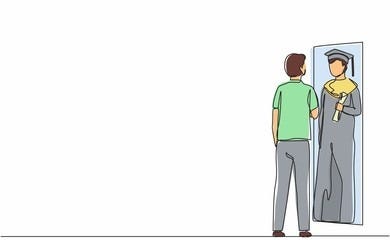
As 2025 comes to an end, many PhDs I speak with are carrying a similar, unspoken feeling.
Not panic.
Not urgency.
More like a low, persistent question.
Is the path I’m on still the right one, or just the one I’ve been on the longest?
For years, the academic system has given us structure. Clear milestones. Clear signals of progress. Even when it’s hard, at least it’s legible.
But somewhere along the way, often near the end of a PhD, during a postdoc, or after a few years in a research role, that structure starts to dissolve. The next step is no longer obvious. The rules feel different. The feedback loop is slower, or absent altogether.
And yet, the pressure to “figure it out” quietly increases.
As we move into 2026, I think many PhDs are realizing something important:
Careers no longer unfold automatically. They have to be designed.

From Accumulating Credentials to Creating Value
One of the hardest mental shifts when moving beyond academia is letting go of credential-based progress.
In academia, advancement comes from accumulation:
more publications
more grants
more citations
more years in the system
Outside academia, progress looks different.
What matters more is:
how you think
how you solve problems
how you make decisions under uncertainty
how clearly you can translate complexity into action
This doesn’t mean your PhD stops mattering. It means its value changes.
The question becomes less “What have I done?”
and more “What can I reliably help others do?”
PhDs who transition well don’t abandon their training, they reinterpret it.
Clarity Beats Certainty
Another pattern I see often: people waiting for certainty before they move.
Certainty about the right role.
Certainty about fit.
Certainty that leaving academia isn’t a mistake.
But certainty rarely arrives first.
Clarity does.
Clarity about:
what kind of problems energize you
what environments drain you
what skills you want to use daily (not just in theory)
what kind of life you’re building alongside your work
This kind of clarity usually emerges through reflection and small experiments—not big, irreversible decisions.
Most career transitions happen gradually, even if they look sudden from the outside.
Reputation Is Built Earlier Than You Think
Many PhDs underestimate how early their “next” career has already begun.
Every time you:
explain your research to a non-academic
help a colleague think through a problem
write publicly or internally
contribute beyond your formal role
You’re building a reputation.
Outside academia, opportunities tend to follow trusted problem-solvers, not perfect CVs.
The earlier you start acting like the professional you want to become, the easier the transition becomes later.
Optionality Is Underrated
Feeling stuck is often less about motivation and more about constraints.
Financial pressure.
Visa timelines.
Identity investment.
Fear of starting again.
Creating options—extra skills, small side projects, broader networks, some financial breathing room—changes how decisions feel.
Optionality doesn’t force you to leave.
It simply gives you the freedom to choose.
And choice is often what’s missing.
A Thought for 2026
A PhD career can easily span four or five decades.
You don’t need to solve everything this year.
You don’t need a perfect plan.
But you do need to stop treating your career as something that just happens to you.
As we head into 2026, it may be worth asking:
Am I defaulting, or designing?
Am I optimizing for prestige, or for fit?
Am I preparing for the career I want—or the one I’ve inherited?
A Small Note
In early 2026, I’ll be running a 5-week accelerator for PhDs who want to transition into industry with more clarity and confidence, without rushing or burning bridges.
APPLY HERE
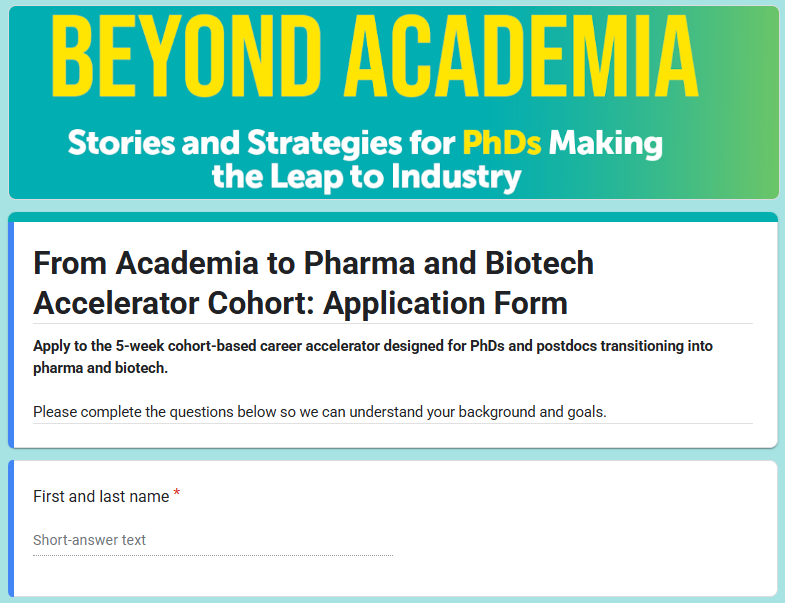
It’s for people who want time to think properly, translate their skills, and move forward deliberately. I’ll share details soon for those interested.
For now, consider this a moment to pause.
You’re not just finishing a year.
You may be standing at the edge of a much longer chapter.
Beyond academia doesn’t mean beyond meaning.
It just means the work changes shape.
—
If this resonated, feel free to share it with a PhD who’s quietly wondering what comes next.
— Matteo